Postcapitalist desire
2021 solo exhibition at Tilton Gallery
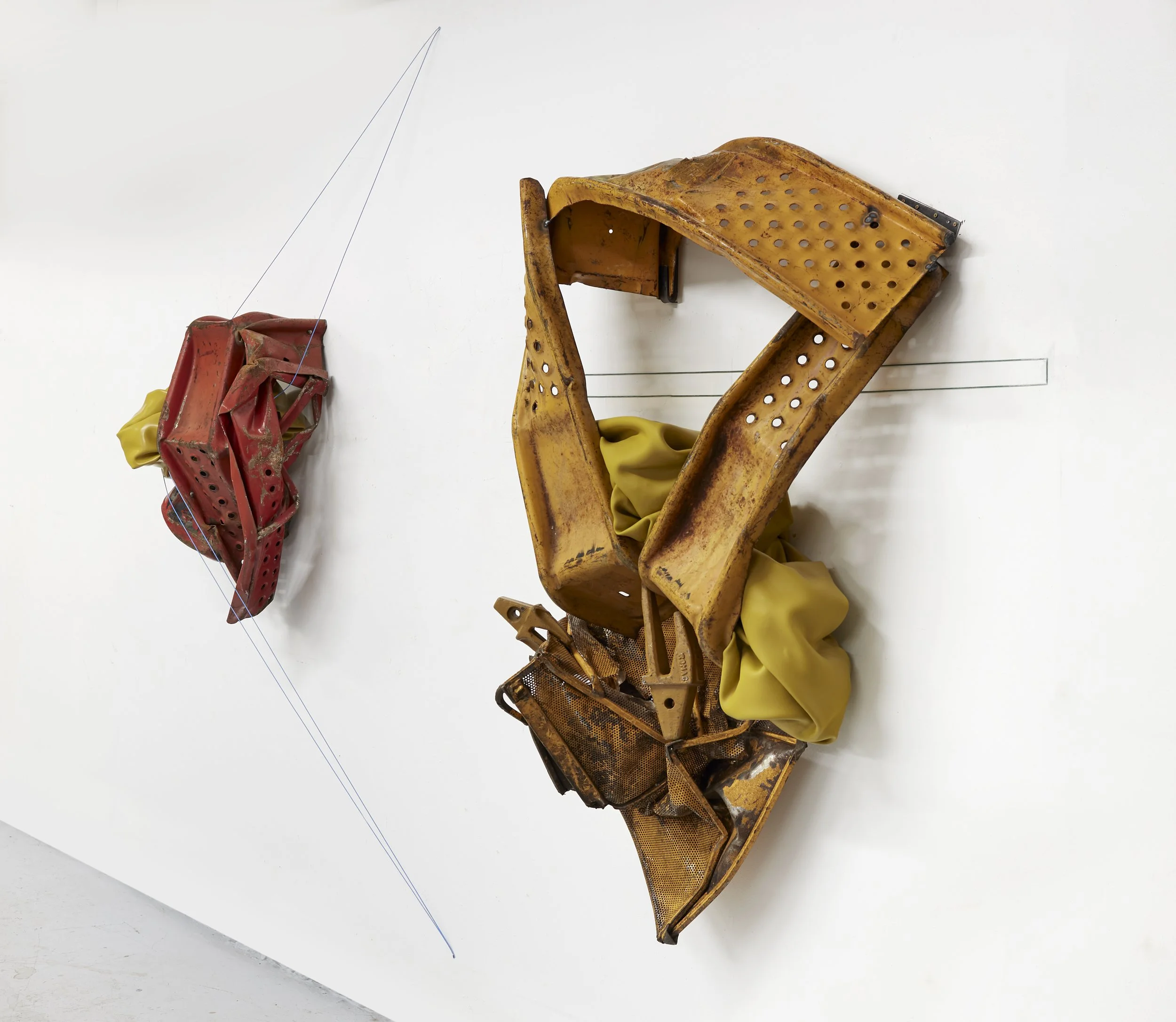
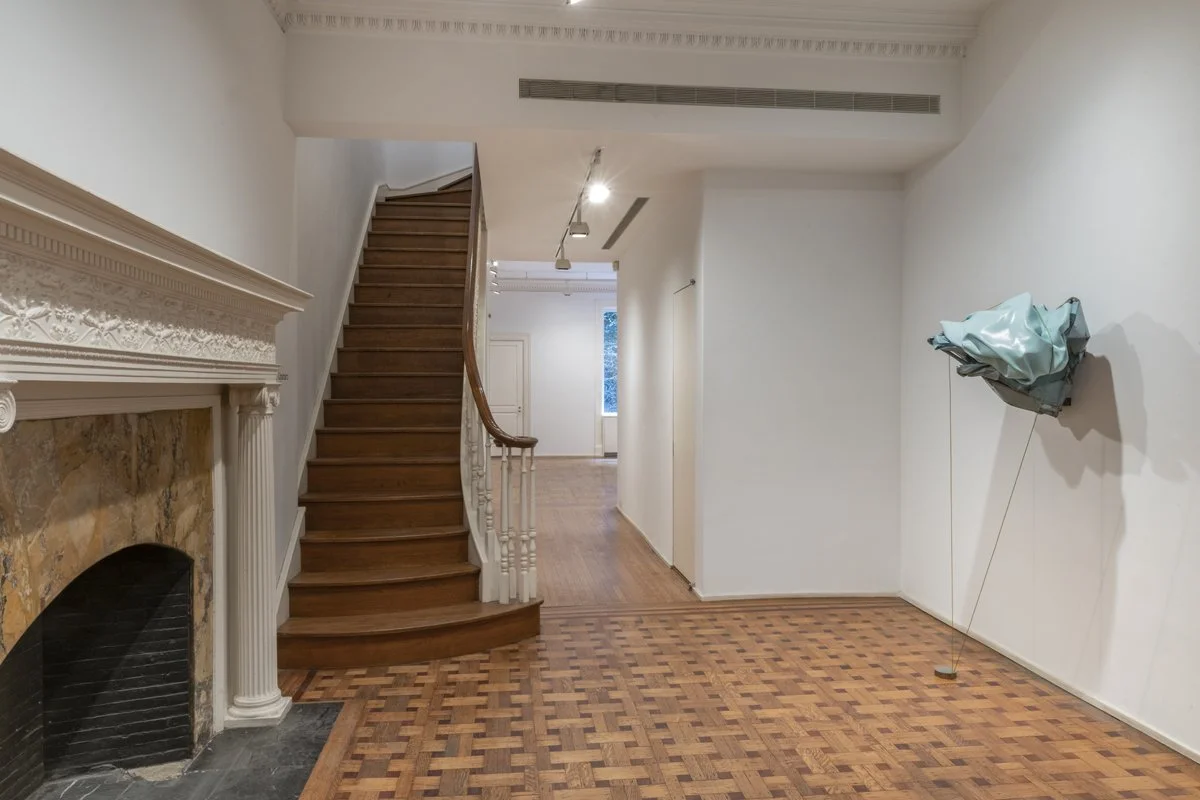
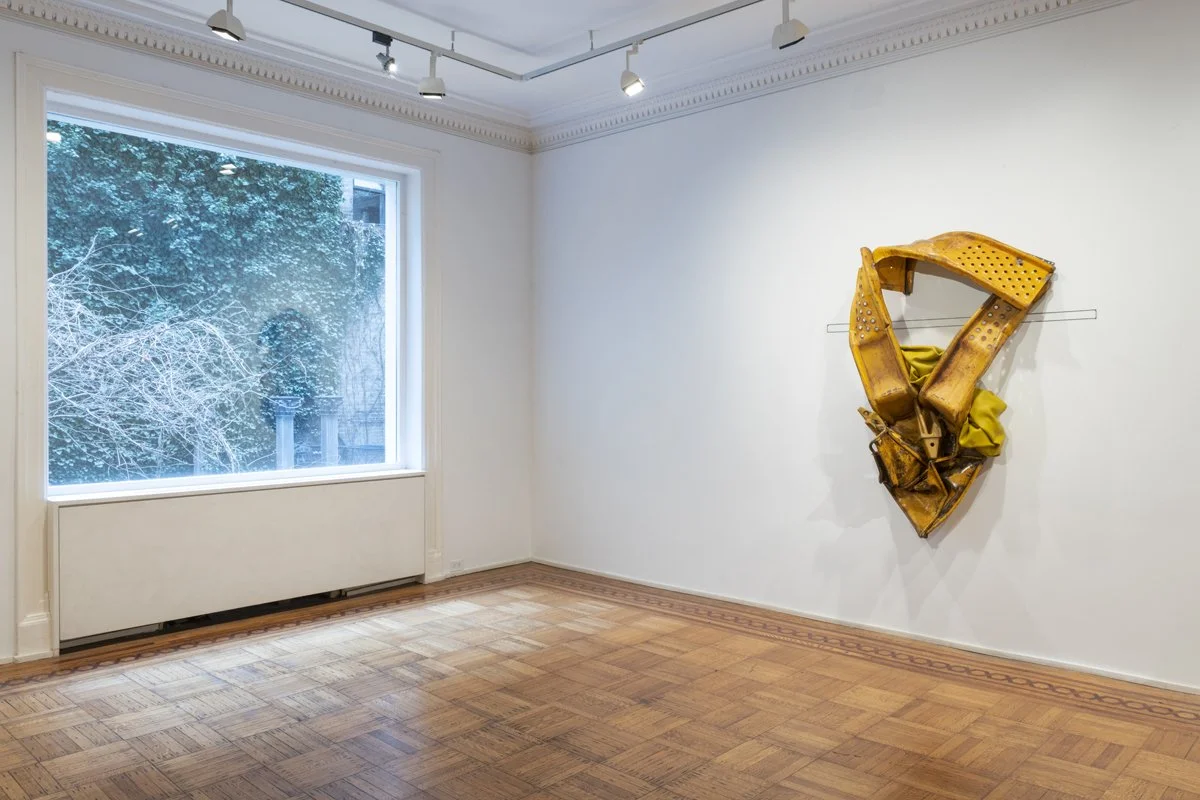
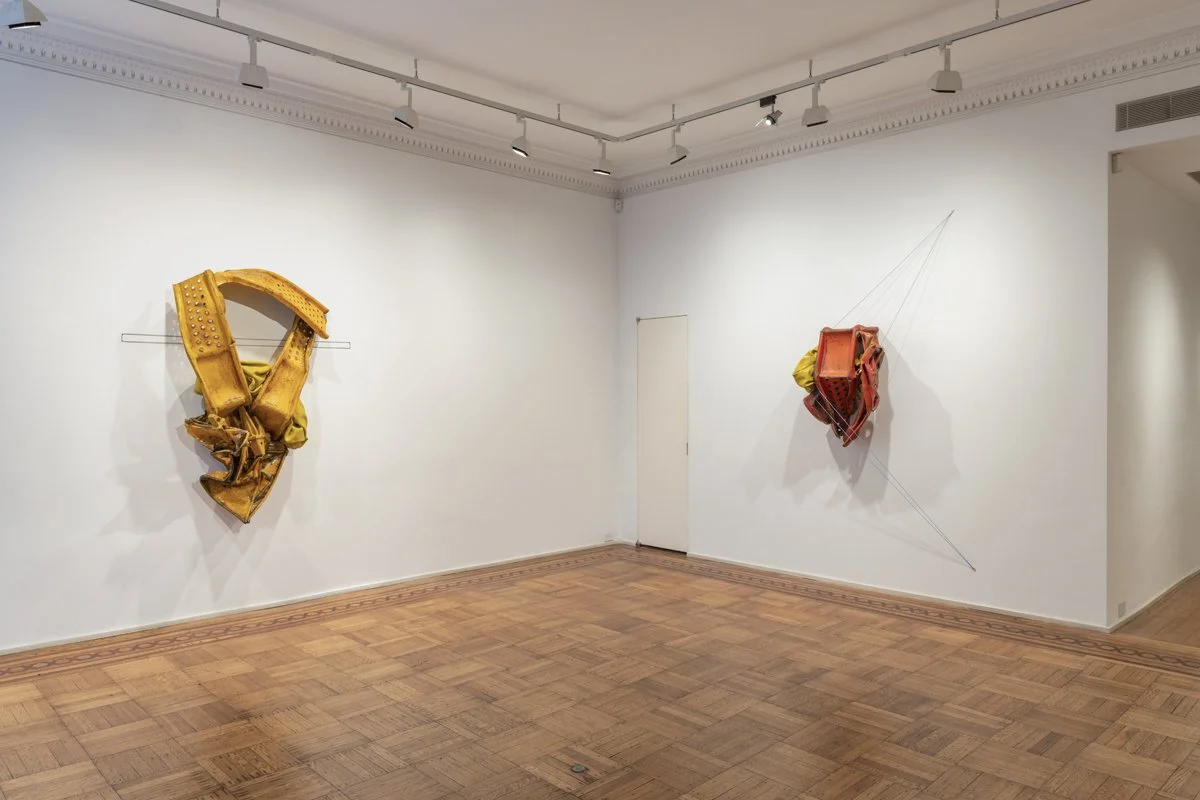
From left to right: Released from the Wire and Making Light, 2021. Photo by Martin Parsekian.
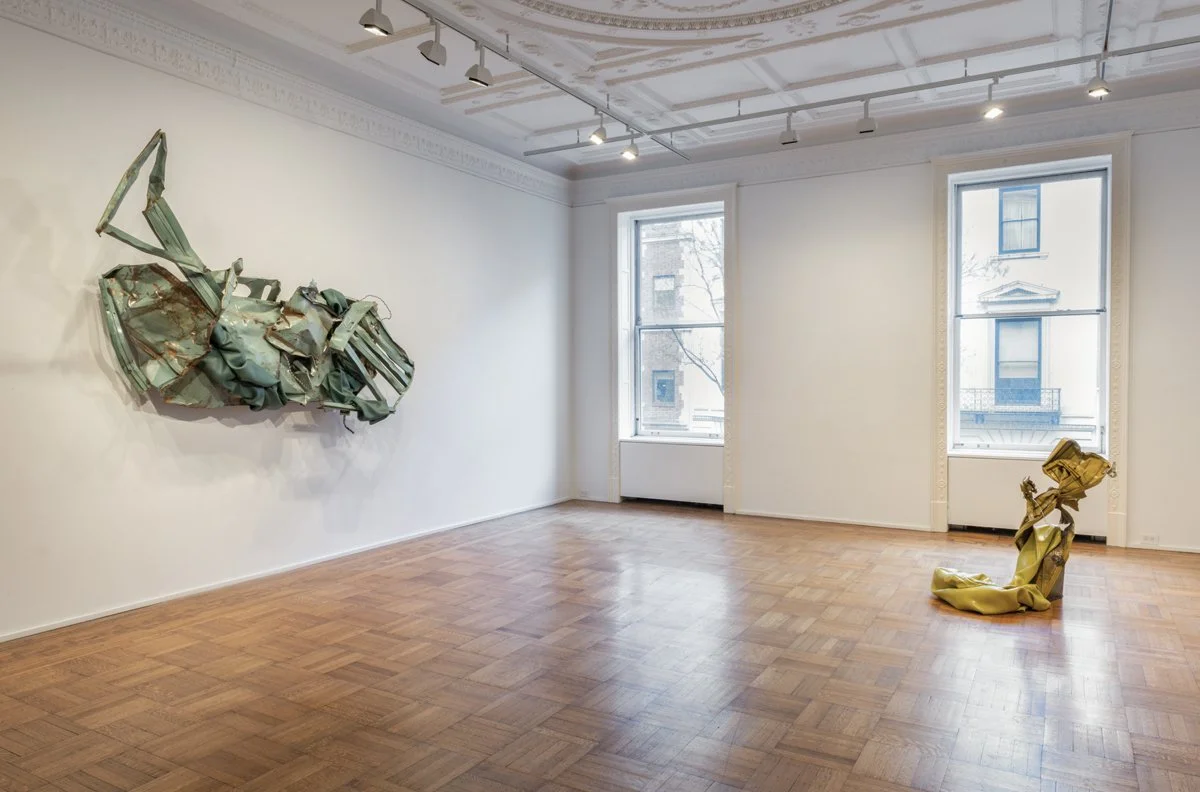
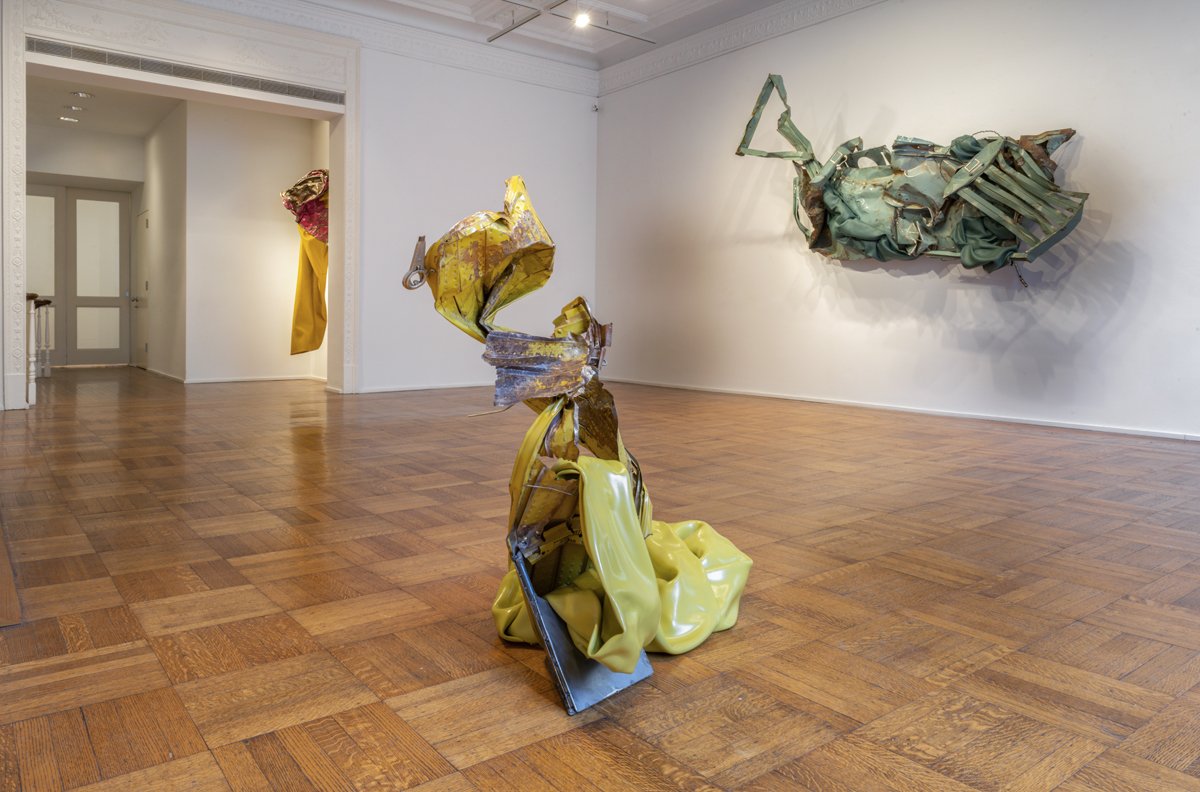
“Kennedy Yanko continues her ongoing investigation into the combination of the seemingly incongruous materials of metal and paint skins to create voluptuous and unexpected sculptural forms. Salvaged metal, crushed or bent into new forms, is juxtaposed with lushly colored soft-appearing paint skins formulated by the artist to flow organically around or through the harder metal forms, at times seeming to pour out of this less pliant element.
Yanko melds the two materials and experiments with her very personal color palette to create works that defy the traditionally static nature of sculpture and that have a sense of continuous movement.
In this new body of work, Yanko has added a new element: wires. Straight and taut, they are threaded through the works like drawings in space, exerting pressure on the paint skins while extending the sculptures’ essence beyond their perceived boundaries. They become yet another way that Yanko causes the viewer to think anew about the sculptures’ relationships to walls and space and in turn to consider our own position in relation to these works within this cultural moment in time.”
— Excerpt from Postcapitalist Desire press release. Read more about the show here.
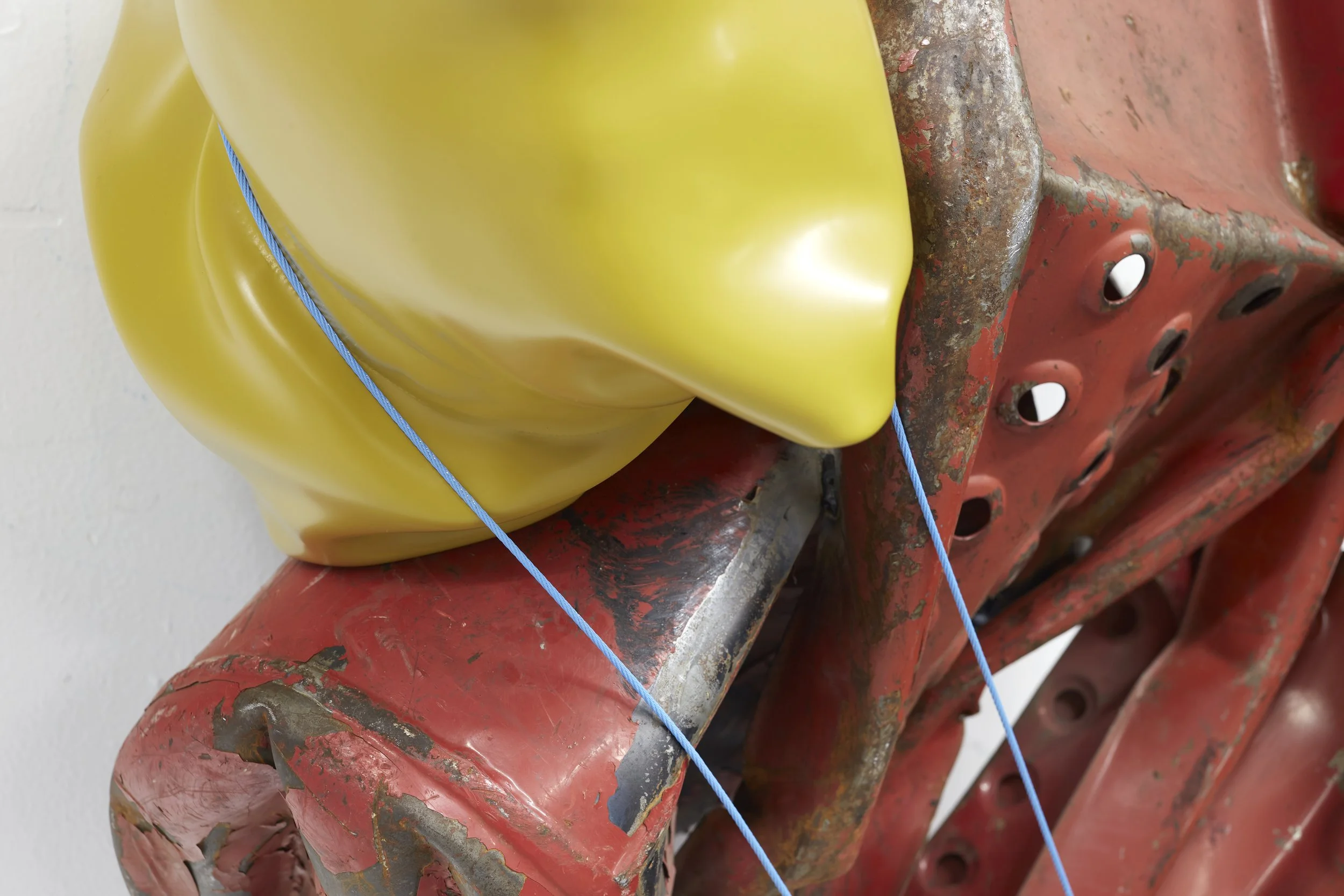
Detail of Released from the Wire, 2021. Photo by Martin Parsekian.
In Kennedy’s words:
I’m fascinated by this notion of the body, and more specifically, the sexualized body in relation to industry, which for our purposes may be synonymous with economy or technology. Bodies become entangled and entrenched in their work and inseparable from their labor. This entanglement impacts behavior and results in the individuals’ commodification of the self.
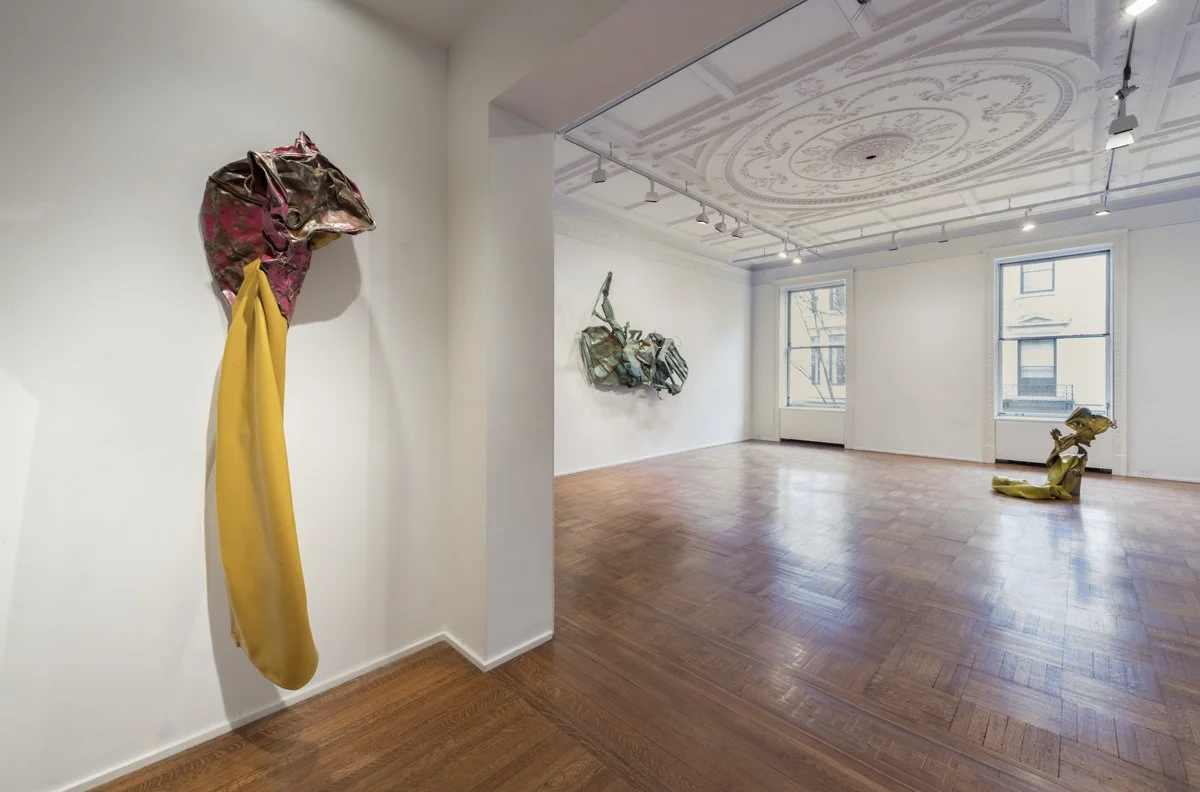
The metal forms of Postcapitalist Desire usher in the whir of industry, while the languid, bodily paint skins bring in gravity and chewy softness. They imply the weight that accompanies the inseparability between one’s work, one’s value, and one’s being. The paint skins perform the dissonance a body feels when it is out of sync with its own actions—when we’re zombie-like; not recognizing that our choices and actions are prompted by economic tides. While the metal and skin are foregrounded in scale and color, taut wire—which I call a “shadow perspective”—is enacting critical tension in the composition. Its reaching lines point towards information beyond what’s immediately available, and in some instances, exert pressure upon the plush paint skins.

Pleasure Page, 2021. Photo by Martin Parsekian.
When we can see the inner workings plainly, and see their full ripple effect, we can separate parts (bodies) from wholes (industry) and reimagine structural bones (possibility; alternatives). The proletariat can recognize its strength and re-allocate its investment, becoming agile, mobile, and shifting power. Understanding the anatomy of capitalism is essential to conceiving anything other than. Therefore, this emphasis on postcapitalist desire is meant to promote an ethos of transparency, something that changes the way in which we engage with the world; a shift that brings the shadows forward, so that bodies may reevaluate their unique relationship to labor, industry, economy (sex), and themselves.